Seedling establishment paradižnika

Growing paradižnika seedlings is crucial for a successful crop. When creating healthy seedlings, important to choose real seed, suitable soil and appropriate growing conditions.

It is best to sow the seeds a few weeks before the intended transplanting outdoors. It is important to provide the right temperature, humidity and light for optimal seed germination. Regular watering and feeding the seedlings with the right fertilizers contribute to their strong growth.

When the seedlings grow their first true leaves, it is time to transplanting into separate pots, where they will continue to develop before finally being transplanted into the garden.

It is important to care for young plants so that they develop into strong and healthy plants that will produce delicious paradižnike.

Seedling establishment paradižnika

1. Preparation

Sowing time

There is a rule among educators that paradižnik is sown 6-8 weeks before sowing in the bed. In mainland Slovenia, this is usually the first half to mid-March.

We gain nothing by sowing too early (some mention January or February as the date). Such plants are stretched out, pale, and weaker. The beginning of April is also not too late to sow paradižnika. Those with a greenhouse and on the Coast, where the chance of frost in April is significantly lower, for example, sow a month earlier.

Sowing

Heat is essential for germination. Light does not play a significant role until germination. The ideal germination temperature is between 20 and 25 °C. A practical place is a shelf above a heated radiator. The temperature can be easily checked with a thermometer. Despite popular belief, the temperature on the shelf can be lower than expected due to a poor seal, and consequently the germination rate is lower. So the seeds do not germinate in a cold, unheated room, as the germination percentage decreases under certain conditions, as can be seen in the photo.

A good way to "not get your hands dirty" before transplanting is to germination bags that accelerate germination. Perhaps a little less relevant for paradižniku (germination is relatively fast), but practical for peppers, chilies, etc.

Sowing area

We have many different options for sowing:

  • pots,
  • Styrofoam plateaus,
  • plastic blocks,
  • peat tablets …


What we will choose is most often depending on the amount of seedlings we want to grow. For smaller quantities, you can also choose yogurt pots. Wash and disinfect used pots thoroughly before reusing them, as young plants are more susceptible to infection.

Earth

When purchasing, it is recommended to use better soil, which is an important factor in education.

Good soil means healthier, optimal seedlings with a developed root system. Potting soil is recommended, which should not be fertilized, otherwise the seedlings will grow too fast and become stretched. We recommend purchasing high-quality soil that will retain moisture well.

2. Sowing paradižnika

Sowing

Fill the pot about 2/3 full with soil, on which we place the desired amount of seeds. When doing so, we should take into account the size of the pot and the desired amount of seedlings – we always sow a little more seeds.

We can thicken the seeds more, as we will transplant or pick them. Cover them with a thin layer of soil. Water it, but not too much (the water must drain well) and place it on a stand - an old tray, a flower pot stand, etc.

Labeling

When sowing, you we prepare marking plates. Of course, they can be made from any plastic packaging where the inscription will be durable. For this purpose, you can cut a plastic bottle or other packaging that can be written on with a waterproof marker. If we are going to sow in yogurt pots and similar pots, we can initially write the name of the variety on the pot and prepare the plates later.

We recommend that you start with You can write on the tablets with both a regular pencil and an alcohol marker. and see which method works for you. It is not uncommon for the writing on certain alcohol-based markers and even regular pencils to fade when used outdoors.

Watering

We water only enough so that soil moist and not wet. If the soil is too wet, the seeds may rot. In dry soil, they will not germinate.

Always water as needed, but make sure all the water drains away – if there are too many “puddles” on the base where the pots are, this is a sign that we have watered too much. Dry the base.

We don't water the plants. A good solution after sowing is to use a sprayer, which does not compact the soil as much as a direct jet of water.

Hardening

At appropriate humidity and temperature seeds germinate in 7-14 days. It is not unusual for some to sprout later (these are the late bloomers). Make sure the soil is moist until they are all outside (or the desired number). We turn the seedlings daily., as they bend towards the light source. This prevents the seedlings from becoming too stretched.

If not a single plant of a certain variety has sprouted, but others have, it is possible that the seeds of the variety are bad, so re-sow more or all of the seeds of that variety as soon as possible.

If nothing works, you're probably using the wrong approach (temperature too low, soil too wet or too dry, etc.).

3. Picking paradižnika

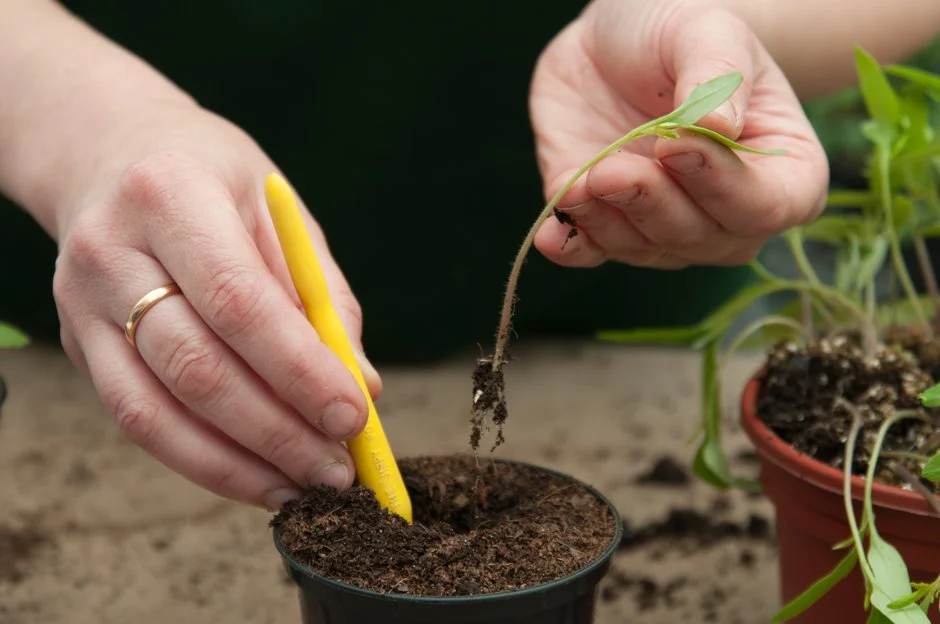
When the leaves of the seedlings are placed in a horizontal position, which happens approximately 10-14 days after germination, the time comes for picking or transplanting young plants.

The soil should be drier. Squeeze the pot on the side and move the seedlings out of the pot together with the soil ball. Now loosen the soil ball and separate the seedlings. If the seedlings have longer roots, they can be shortened (pinched) at the end. This will not damage them. They will respond to the perceived stress by developing additional roots.

Let's prepare new pots. Cover the bottom with soil. Loosen the seedling's root ball and place it in the pot (keeping it as close to the bottom as possible, where it is stronger) and cover it with soil almost to the cotyledons. There should be 1 seedling per pot, or more if you have larger pots. Water lightly, but do not overwater. Then water as needed, but never too much, especially not on the plants, as this poses a risk of developing diseases fungal infections. Between waterings, wait until the soil dries out or moves slightly away from the pot. This will help the plant become more drought-tolerant.

Let the Pikirans be still a few days in a warm room, then move them to a cooler place (10 – 15°C), where they have as much light as possible. If we leave them in a warm or poorly lit space, they will stretch out.

Share contribution:

Continue reading