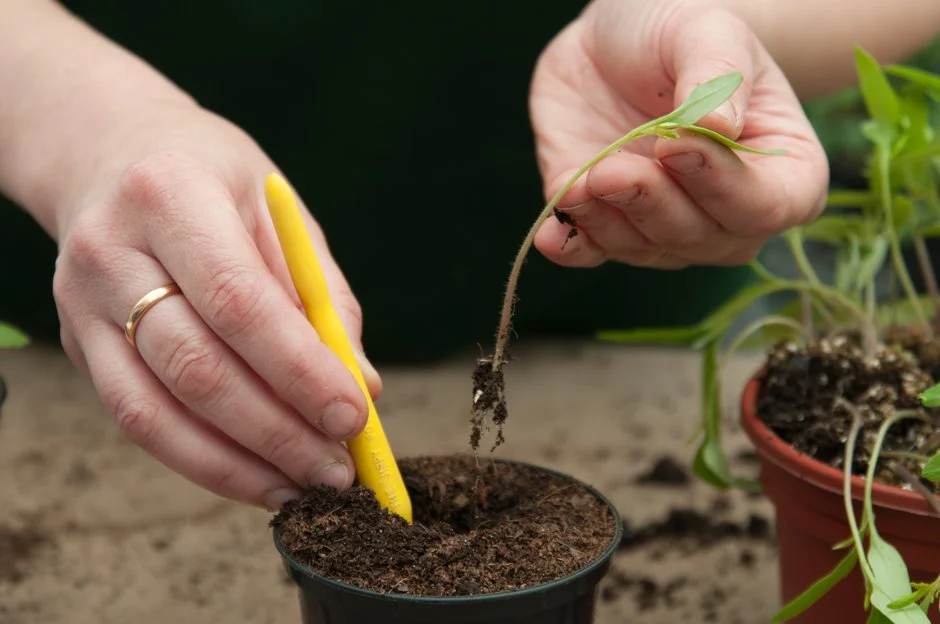
Chinese bean (Vigna unguiculata ssp. sesquipedalis) – beans up to 1 meter long 🌱

Chinese beans, also known as "long beans" or "yardlong beans", are an interesting and still rare type of legume in our country, which impresses mainly with its extremely long pods.

Botanically, it is a subspecies of the species Vigna unguiculata, which belongs to the legume family (Fabaceae). It is related to the cowpea and is native to tropical and subtropical regions of Asia and Africa.

🌿 How does it grow?

Chinese beans are a vigorous growing, climbing plant.

Features:

  • needs support (mesh, poles, pergola)
  • grows very quickly
  • reaches a height of 2–3 meters
  • forms extremely long, slender pods

The pods can be from 30 to 80–100 cm long, depending on the variety and conditions.

The plant likes:

  • warm weather
  • sunny position
  • well-drained soil

Since it is a heat-loving plant, it is sown when the soil warms up sufficiently.

🌸 Flowering and fruits

The flowers are delicately purple or yellowish, similar to other buttercups.

Fruits:

  • long and thin
  • soft and tender when young
  • suitable for harvesting at a young stage

If left on the plant too long, they become fibrous and form seeds.

🍽️ Use in the kitchen

Chinese beans are extremely popular in Asian cuisine.

It is used:

  • in stir-fry dishes
  • in wok dishes
  • in curries
  • as an attachment
  • can also be quickly blanched

Its flavor is delicate, slightly sweeter than classic green beans.

Because the pods are long and thin, they are often cut into shorter pieces.

🌍 Interesting facts

  • The name “sesquipedalis” means “a foot and a half long” (about 45 cm).
  • In Asia, it is often grown on tall structures where the pods hang down.
  • Due to its lush growth, it is also visually very attractive in the garden.
  • Like a legume, it fixes nitrogen from the air, thus improving soil fertility.

🌱 If you want to try it

Chinese bean seeds are available here:
👉 https://paradiznik.si/izdelek/kitajski-fizol/

Share contribution:

Continue reading