Consolidation
When the days get warmer in April (>18°C), the seedlings can be placed outside during the day to firm up - the stems need to be as strong as possible to help them bear fruit - they can break (weight, wind).
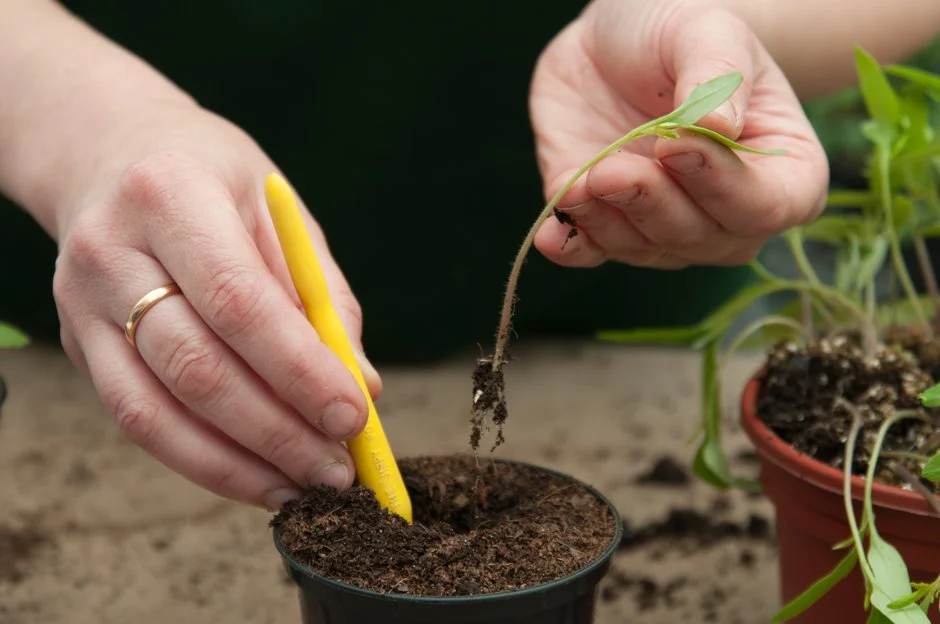
The leaves will be darker green if they have enough light. Do not expose young seedlings that are not yet adapted to strong sunlight, as they will be scorched (leaf scorch). When putting them outside, watch out for wind and rain - if they are not adapted they will break. A gentle breeze is very ideal for hardening, but otherwise do everything gradually. If the wind breaks a seedling, you can still save it - cut it off where it broke. Cut off almost all the leaves, leaving only the ones at the top, and put it as deep as possible in the soil (pot). The soil should be moist.
In time, the plant will have put down roots and will be comparable to other seedlings. Once the temperature has warmed up further, the seedlings can be left outside at night (in a shelter). It should be at least a week before you intend to plant them in the bed. If desired, they can now be sprayed with home-made preparations or hardened with natural sprays.
Planting
In mainland Slovenia, plant outdoors somewhere after 1 May, when the main danger of frost has passed. It is worth monitoring the weather forecast and the temperature of the floor, which must be heated to at least 15°C.
Choose a sunny location for sowing. Tomatoes need as much sun as possible, to form sweetness and to dry as soon as possible after rainfall. In the meantime, tomatoes in the shade will be too thin, grow less well and develop fewer fruits, which will taste worse. Other vegetables that do not require as much sun are grown in shady parts of the garden.
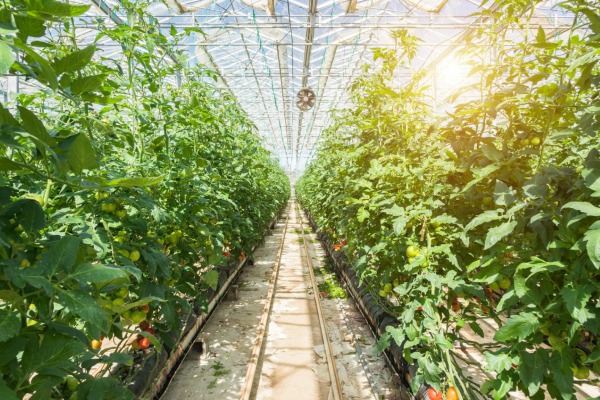
As a rule, seedlings are planted against a support (except for those who don't need it). There are different shapes of stakes; cane, bamboo, hazel or commercial plastic. In greenhouses, rope can also be used for support, stretched from the top into the ground.
The seedling can be buried slightly deeper - This means burying part of the stem. The plant will develop roots in this part, which means it can pump water even more efficiently.
The seedlings are immediately tied to the support stake. Raffia is useful as a natural material and does not need to be removed from the garden in autumn.
The recommended distance between stakes is at least 50-70 cm, and between rows about 100 cm. The leaves of neighbouring plants must not touch. We are used to sowing paradižnik seedlings next to each other, which is a big mistake. In this way, there is not the much-needed clearance between the plants. Moisture accumulates between the leaves, which is the basis for the development of the most common diseases. Such paradižniks have already »rusted« in August and are decaying. Consideration of distance and leaf rubbing are two of the key criteria, so that the fruit can be harvested until the first frost, or at least until the intense autumn fog, when the plants often sprout.